We help you with business loan solutions.
Starting or growing a business is exciting, but let’s be honest—figuring out how to finance everything can feel a bit overwhelming. You might be wondering where to even start, especially if it’s your first time seeking extra funds to keep everything on track. And that’s where a business loan can make all the difference. But what exactly is a business loan, and how can it help you?
In this guide, Unconditional Finance will walk you through everything you need to know about business loans—from understanding how they work to exploring different types of loans that fit your business needs. We’ll also share tips to help you qualify, so you can feel confident about your decisions. Ready to get started? Let’s jump in and help you find the right financial solution for your business.
A business loan is simply borrowed money that helps you fund different needs for your company. Maybe you need new equipment, want to expand operations, or perhaps you’re dealing with day-to-day expenses and tight cash flow. Sounds simple, right? Well, it is—but understanding the details of how business loans work can make the whole process smoother and ensure you’re choosing the right option for your business. Read More
In a nutshell, a business loan is an agreement between you and a lender where you receive a set amount of money upfront, which you agree to repay—plus interest—over time. The interest rate can change depending on things like the kind of loan you choose, your credit score, and how long your business has been running. Typically, business loans come with either fixed or flexible interest rates, with repayment terms ranging from a few months to several years.
You might be thinking, “Do I really need a loan?” It’s normal to feel a bit unsure, especially if it’s your first time taking out a loan for your business. But there are plenty of scenarios where a business loan could be exactly what you need to take things to the next level. Let’s explore some common scenarios where a loan could make all the difference.
Planning to open a second location or need more space to operate? Expansion requires capital, and that’s where a business loan comes in handy. It gives you the cash you need to grow without pulling from your everyday working funds.
Need new equipment? Whether you’re a construction company that needs an excavator or a café looking for an upgraded espresso machine, equipment isn’t cheap. A business loan helps spread out the cost, so you’re not sacrificing your cash flow all at once. Plus, many loans are tailored specifically for equipment purchases.
Cash flow can be hard to predict, especially when you’re waiting for large payments to come in. If you’re struggling to cover payroll or expenses while waiting on client payments, a business loan (or even a line of credit) can smooth out those bumps so you can keep things on track.
As your business grows, you might need more hands on deck. But hiring great talent costs money. A business loan allows you to invest in the people you need now, without worrying about how to afford their salaries right away.
Growth doesn’t just happen—it takes strategy, and sometimes, it takes money. Maybe you’re launching a new product or running a major marketing campaign. With a business loan, you can invest in your growth initiatives without putting a strain on your working capital.
Business acquisitions are a bold move but can also be a huge opportunity for growth. Whether it’s taking over a competitor or investing in a complementary business, a loan can help you seize those opportunities when they arise.
Ever think about your future? Taking out a business loan now, and managing it well, can actually build your business credit. This opens up more favourable financing options down the line when you need them most.
Wondering how to get started with your business loan? Let us help! Reach out to us today for tailored advice on selecting the right loan to meet your business goals.
Business loans aren’t a one-size-fits-all solution. The type of loan you choose depends on your specific needs. Here are some common loan types:
With a secured business loan, you’ll need to offer something valuable, like property, equipment, or inventory, as collateral. This reduces the lender’s risk, which usually leads to lower interest rates. It’s ideal for businesses that have valuable assets to pledge and want to secure more favourable terms. But if you can’t make the payments, the lender can take your collateral. This kind of loan is typically easier to obtain for businesses with stable assets.
An unsecured loan doesn’t require any assets as collateral, making it accessible if your business doesn’t have valuable property or equipment. The trade-off is typically higher interest rates since the lender bears more risk. It’s often a faster process since there’s no need for asset evaluation, making it perfect if you need quick access to funds. However, approval is usually based more on your business’s cash flow and creditworthiness.
A business line of credit is like having a credit card for your business, giving you flexible access to money whenever you need it. You only pay interest on the amount you’ve borrowed, not the entire credit limit, which helps manage cash flow more efficiently. It’s particularly useful for covering short-term needs, such as fluctuating operational expenses. This type of loan offers revolving credit, meaning once you pay down the balance, the credit becomes available again.
With a business overdraft, your bank allows your account to dip into negative balances up to a pre-agreed limit. This is an excellent tool for managing short-term cash flow gaps, such as paying bills when awaiting incoming payments. You only pay interest on the overdrawn amount, not the full limit. It’s useful during periods when you need extra liquidity without taking out a full loan, but beware of higher interest rates and fees if you overdraw regularly.
A chattel mortgage is used primarily for financing vehicles or equipment where your business takes ownership of the asset from day one. The loan is backed by the asset, meaning the lender keeps control of it until the debt is completely repaid. This option allows you to claim tax deductions on the interest and depreciation of the asset, making it financially beneficial for capital-intensive businesses. It’s a great option for businesses that want immediate use of the asset while spreading out the cost.
This loan is specifically for purchasing large, expensive equipment or machinery that your business needs to operate. It helps you avoid a large upfront payment by allowing you to pay in instalments over time. The asset itself often serves as collateral, which can result in better loan terms. Equipment finance can be vital for industries such as manufacturing, construction, or healthcare, where operational success relies on having updated tools or machines.
Invoice finance allows you to access funds based on unpaid invoices, bridging the gap between issuing invoices and receiving payment. This can improve cash flow without waiting for customers to settle their bills. You typically receive up to 85% of the invoice’s value upfront, and the remaining amount (minus fees) once the customer pays. It’s useful for businesses with long payment cycles or those dealing with frequent late payments, especially in industries like manufacturing or wholesale.
For those dealing with property purchases as part of their business expansion, you might want to explore commercial property loans more to see how this financing can work for you.
With a commercial hire purchase, you ‘hire’ an asset—such as vehicles or equipment—by making regular payments. You don’t own the asset until the final payment is made, but you get to use it throughout the loan term. The structure of hire purchases often provides flexibility with payment schedules and allows businesses to manage cash flow while acquiring the necessary assets. It’s especially beneficial for businesses that need to spread out payments for high-cost assets.
A finance lease is an arrangement where the lender purchases an asset (like machinery or vehicles) on behalf of the business, and you lease it over an agreed period. Once the lease ends, you have the option to purchase the asset or upgrade to a new one. This is a good option for businesses that don’t want to take ownership right away but need access to essential equipment. Lease payments can often be tax-deductible as an operational expense.
Low-doc loans are designed for businesses that may not have extensive financial records, such as startups or sole traders. These loans involve less paperwork, making the process faster, though the interest rates tend to be higher since the lender is taking on more risk. They’re a great solution if you need financing but don’t have formal financial statements ready. However, it’s important to carefully review terms, as some lenders may charge additional fees.
Bad credit business loans are for businesses with poor credit histories or lower credit scores, which might not qualify for traditional loans. While interest rates are higher to offset the lender’s risk, these loans can provide much-needed capital when other options aren’t available. They can also serve as a way to improve your credit score if managed responsibly. Be mindful of the terms, as repayment flexibility might be limited.
When it comes to interest rates, even small differences can add up. Rates change based on factors like the type of loan, your credit score, and whether or not the loan is secured. Here’s a quick overview of what you might expect:
Loan Type | Interest Rate |
| Small business loans | 7.50-15% p.a. |
| Unsecured business loans | 12-20% p.a. |
| Business line of credit | 8-15% p.a. |
| Business overdraft | 8-15% p.a. |
| Asset & equipment finance | 7.50-15% p.a. |
| Invoice finance | 3-12% p.a. |
| Fit-out finance | 7.50-15% p.a. |
| Bad credit business loans | 18-20% p.a. |
Wondering how to lower your interest rate? Secured loans generally offer better rates, while unsecured loans or loans for businesses with lower credit scores tend to be higher.
Not sure if you qualify for a business loan? You might be surprised! The eligibility requirements are pretty straightforward, and we’re here to break it down for you.
Lenders want to know you’re a good candidate before handing over the funds. Here’s what they typically look for:
✓ Australian citizenship or permanent residency – Are you eligible to live and work in Australia? That’s a great start.
✓ Active ABN or ACN – Your business needs to be officially registered with an Australian Business Number (ABN) or Australian Company Number (ACN).
✓ Trading history – Most lenders prefer businesses that have been up and running for at least 6-12 months. But don’t worry if you’re a startup—there are specific loans just for you!
✓ Minimum turnover – This can vary, but expect to show an annual turnover of at least $75,000 – $100,000.
✓ Good credit score – Your business credit score should ideally be above 475, though some lenders are more flexible if you’re a homeowner or have valuable assets.
Curious if your business is eligible for a loan? Reach out to our team for a free consultation, and we’ll guide you through the process to help improve your chances of approval.
Meeting the basic criteria is one thing, but how do you actually get that loan approval? Here’s what lenders love to see:
✓ Strong cash flow – Healthy cash flow shows lenders that you can handle monthly repayments.
✓ Good credit history – If you’ve got a solid credit history (both personal and business), you’re in a great position. Even if it’s not perfect, there are options available to you!
✓ Assets for security – For secured loans, having assets like property, inventory, or vehicles can increase your borrowing power and lower your interest rate.
Remember, every business is different. Some lenders are flexible, and others have more specific criteria. It’s always a good idea to shop around and find the best fit for you.
Applying for a small business loan doesn’t have to be stressful. By following these steps, you can go through the process with confidence and a clear understanding.
Knowing where your business stands financially is key. This means reviewing your current income, profits, expenses, and future projections. Not sure where to start? Create a cash flow statement—it’s a snapshot of your money coming in and going out. The more you know, the better equipped you’ll be to handle those lender questions.
Your business plan is the roadmap that shows lenders where you’re headed and how you plan to get there. Include details about your business model, revenue streams, and growth strategies. Be honest and clear, and don’t shy away from addressing potential risks—lenders appreciate transparency.
How much do you really need, and can you afford the repayments? This is where your cash flow projections come in handy. Take time to calculate the maximum loan amount you’re comfortable with and what kind of monthly payments fit your budget. Consider factors like Loan to Value Ratio (LVR) and whether you need the money upfront or gradually.
Not all business loans are created equal. Whether you’re looking at secured loans, an overdraft, or invoice financing, it’s important to choose a loan type that matches your needs. Each loan comes with different interest rates and terms, so analyse the costs carefully.
Lenders will want to see certain documents, like your business’s financial reports, forecasts, proof of identification, and maybe even personal financial info. Gather everything into a neat, organised file. Trust us, it’ll make the process much smoother.
It’s easy to get caught up in the numbers, but make sure you’re borrowing from a reputable lender. Do your research, check professional registers, and ensure the lender is registered with the Australian Securities and Investments Commission (ASIC).
Not sure about some of the financial jargon or how to best present your business plan? It’s totally fine to ask for help! Reach out to a Sydney mortgage broker—they can provide valuable insights and even join you for the meeting if needed.
Once you’ve got everything in place, it’s time to apply. Double-check the details and take a deep breath—you’ve done your homework. If your loan application isn’t approved on the first try, don’t panic. Ask for feedback and make any necessary changes before applying again.
Read Less

Need more detail on the process? Check out our guide on the business loan application process.
The time it takes to get a business loan approved depends on both the lender and the kind of loan you’re applying for. Traditional banks may take anywhere from a few days to a few weeks, especially if you're applying for a secured loan or require a larger loan amount. However, alternative lenders or online lenders often offer faster approvals, sometimes within 24-48 hours. To speed up the process, make sure all your documents, including financial reports and business plans, are ready and organised before applying.

If you’re unable to make a payment on your business loan, it’s important to notify your lender as soon as possible. Many lenders are willing to work with you to create a payment plan or provide short-term relief if your business is going through temporary difficulties. However, missing multiple payments can lead to penalties, higher interest rates, or even default, where the lender can take legal action or seize collateral in the case of secured loans. Always communicate openly with your lender if you anticipate trouble repaying.


Yes, many business loans allow for early repayment, but it’s important to check the terms of your loan agreement. Some lenders may charge prepayment penalties to make up for the interest they would lose on early repayment. If you're considering paying off your loan ahead of schedule, weigh the benefits of avoiding future interest payments against any penalties the lender may impose. Some lenders also offer flexible repayment terms that encourage early payment without penalties, so it's always worth asking.
To increase your chances of getting approved for a loan, focus on improving your business’s financial stability. Start by ensuring you have a good credit score, both personal and business, as many lenders use this as a key metric. It’s also important to have a well-organised business plan demonstrating how you’ll use the loan to generate revenue and repay the funds. Lastly, ensure you have a healthy cash flow, as lenders want to see that you can handle monthly repayments. If possible, consider offering collateral for better terms or working with an advisor to prepare your application.
No, business loans should only be used for business-related expenses. Using a business loan for personal expenses could breach the loan agreement, lead to penalties, and potentially damage your relationship with the lender. Additionally, it could complicate your business’s financial records and make it harder to get financing in the future. It’s important to clearly separate personal and business finances to maintain legal and financial clarity. Always use the loan for its intended business purposes, such as expansion, hiring, or purchasing equipment.
Start with a Finance Broker A good starting point is speaking with a finance broker — and it costs you nothing. A broker like Unconditional Finance has access to 60+ banks and lenders at once, compares policies on your behalf, and structures your application for the strongest chance of approval. Rather than approaching lenders one by one and risking unnecessary credit enquiries, a broker does the legwork and presents you with the right options for your specific situation.
Banks and Credit Unions Your bank or credit union is often where brokers start their search. Traditional banks offer competitive rates but have stricter requirements — typically 2+ years in business, solid revenue, and a clean credit history. Credit unions tend to be more flexible and member-friendly. If you already have a relationship with your bank, that can work in your favour.
Online and Non-Bank Lenders Online lenders are faster and easier to qualify for, with approvals sometimes coming through in 24–48 hours. The trade-off is higher interest rates. They’re a strong option when you need funds quickly or don’t meet the criteria of a major bank — and brokers often have access to non-bank products you won’t find by searching on your own.
Secured Business Loans If you have assets — such as property, equipment, or receivables — secured lending typically unlocks larger loan amounts at better rates. The asset acts as collateral, giving lenders more confidence to approve and reducing the cost of borrowing to you.
Equipment or Invoice Finance If you’re buying equipment or waiting on unpaid invoices, specialist lenders will advance funds against those specific assets. Approval is generally easier since there’s built-in collateral, and repayments are often structured to match the useful life of the asset or payment cycle.
Business Lines of Credit Not a loan in the traditional sense, but a flexible facility you draw from as needed — ideal for managing cash flow rather than funding a one-off purchase. Available through banks and many non-bank lenders on a broker’s panel.
Microlenders and CDFIs For smaller loans (under $50,000), startups, or businesses that don’t yet qualify through mainstream channels, community lenders and microfinance providers are worth exploring. They’re designed for situations where traditional credit criteria don’t apply.
Bottom line: Starting with a broker gives you a full view of the market, protects your credit file, and often surfaces options you wouldn’t have found on your own. In most cases, the service is completely free.
Getting a small business loan is a big decision, but with the right information, it doesn’t have to be stressful. From securing funding for expansion to managing cash flow, the right loan can unlock opportunities for growth and stability. Now that you’ve learned about the different business loan options and how the process works, you’re better equipped to choose what’s best for your business.
Remember, taking the time to understand your finances, preparing a solid business plan, and choosing the right loan type can make all the difference. If you still have questions or need help finding the best loan for your situation, don’t hesitate to reach out. We’re here to guide you every step of the way, ensuring you have the support you need to make smart financial decisions for your business’s future.
Now’s the time to take the next step—whether it’s exploring business loan options or preparing to apply. Your business goals are within reach!
5.0 rating from 400+ verified Google reviews


Our People
Experienced professionals delivering strategic lending advice, seamless execution, and long-term financial confidence.
Principal Finance Broker
18 Years in the Industry
Founder and multi-award-winning broker specialising in strategic loan structuring for long-term portfolio growth. #1 SFG Top 50 Loan Writer and 2025 Broker of the Year.
Credit Representative (486040) of Mortgage Specialists Pty Ltd ACN 612 422 178 · ACL 387025
Meet Chris
Senior Mortgage Broker
7 Years in the Industry
Portfolio-focused broker helping clients build repeatable, strategic property investment success. Ranked #23 Top 50 Loan Writer with SFG.
Credit Representative (558056) of Mortgage Specialists Pty Ltd ACN 612 422 178 · ACL 387025
Meet Joel
Operations Manager
16 Years in the Industry
Highly organised finance professional ensuring smooth, efficient progress from submission to settlement. Nominated for Best Administrator by SFG.
Credit Representative (455589) of Mortgage Specialists Pty Ltd ACN 612 422 178 · ACL 387025
Meet Stephanie
Credit Analyst / Broker
15 Years in the Industry
Former banker with deep lender process expertise, crafting strong applications for consistently smooth approvals.
Credit Representative (549331) of Mortgage Specialists Pty Ltd ACN 612 422 178 · ACL 387025
Meet William
Credit Analyst
8 Years in the Industry
Strategic analyst with strong banking and broking experience, supporting confident investment decisions.
Meet TJ
Credit Analyst
5 Years in the Industry
Detail-driven analyst focused on compliance, clarity, and client-first lending support.
Meet Reece
Settlements Specialist
17 Years in the Industry
Settlement expert known for friendly communication and delivering smooth, stress-free completions.
Meet NicoleProven. Strategic. Results-Driven.
We don't just "compare rates." We structure loans correctly from day one — improving approval strength, borrowing power, and long-term flexibility.
Strategic structuring designed to protect, optimise, and grow your wealth — not just secure approval.
We match lender policy before price. Cleaner submissions, fewer conditions, and stronger outcomes — even for complex income, trusts, SMSF and multi-property portfolios.
Founded by Chris Raymond — multi-year Top 100 broker and 2025 Broker of the Year. Nationally recognised performance, not theory.
Most pre-approvals within 2 business days (case dependent). We manage documentation, lender communication, and settlement end-to-end.
Major banks + specialist lenders. We choose based on policy fit and structure — not convenience or habit.
Your loan is reviewed regularly (often every 6 months where eligible) to keep pricing competitive and structure aligned with your long-term goals.
Licensed since 2017, we've navigated rate cycles, APRA changes, and shifting markets — structuring loans built to stand the test of time.
Our service is completely free to you. We're paid by the lender after settlement — expert strategy and ongoing support at zero out-of-pocket cost.
We stress-test repayments, plan buffers, and structure loans for flexibility — so your mortgage supports your lifestyle, not strains it.
Recognition
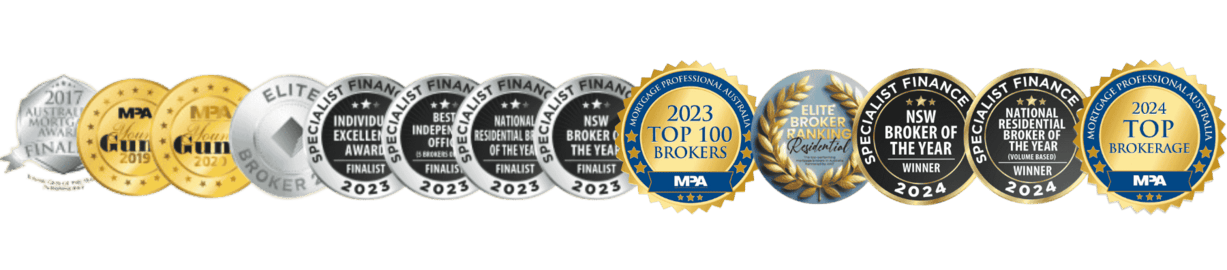
Year-by-year highlights of the awards earned by our brokers and business.
As Seen In
Our team is regularly invited to share market insights across Australia's most respected mortgage publications, podcasts, and award programs.
Commentary on the Home Guarantee Scheme and self-employed policy changes.
Maximising borrowing capacity for property investors.
FBAA Residential winner at the Australian Mortgage Awards.
Chris Raymond listed among Australia's top mortgage brokers.
Stephanie Coleman — Administrator of the Year & MPA Elite Women.
All sources linked above are independent media coverage, official awards pages, and published industry rankings.
Free — No Obligation
Get a personalised borrowing power assessment from an award-winning team — tailored to your income, goals, and the current lending landscape. No cost. No commitment. Just clarity.
Get Your Free Assessment
Helping first-time buyers secure their dream home in Sydney with tailored loan solutions and expert guidance.
View More
Save money or unlock equity by refinancing your existing mortgage with competitive rates and flexible options.
View More
Finance your home improvement projects in Sydney with loans designed to cover renovation costs seamlessly.
View More
Boost your property portfolio with investment loans tailored for growth and financial success.
View More
Simplify trust property purchases with customised lending solutions for trusts and trustees in Sydney.
View More
Achieve property ownership while renting in your desired location with innovative rentvesting loan solutions.
View More
Leverage your Self-Managed Super Fund to invest in property with specialised SMSF loan products.
View More
Unlock the value in your home in Sydney to access funds for renovations, investments, or personal projects.
View More
Save on Lenders Mortgage Insurance with loan options tailored for eligible borrowers.
View More
Secure your next property in Sydney with loan solutions designed for second-home buyers.
View More
Transition seamlessly between properties with short-term financing for home purchases.
View More
Achieve homeownership sooner with no-deposit loan options for eligible buyers in Sydney.
View More
Switch to a better mortgage deal with ease and enjoy potential savings.
View More
Access your home’s equity in Sydney during retirement with tailored financial solutions.
View More
Flexible home loan options to support your lifestyle during retirement.
View More
Invest in eco-friendly homes or upgrades with loans supporting sustainability initiatives.
View More
Exclusive loan products designed for high-net-worth investors with complex financial needs.
View More
Turn your dream holiday home in Sydney into reality with specialised financing options.
View More
Expand your business with tailored loans for purchasing or refinancing commercial properties in Sydney.
View More
Specialised funding solutions to support National Disability Insurance Scheme-related property investments in Sydney.
View More
Achieve homeownership faster with a guarantor loan that reduces upfront costs.
View MoreEverything you need to know about business financing in Australia — answered plainly by the team at Unconditional Finance.
A business loan is money borrowed from a lender — such as a bank, credit union, or specialist lender — that you repay over an agreed term with interest. Businesses use them to buy equipment, hire staff, cover cash flow gaps, fund expansion, or enter new markets.
Business loans can be secured (backed by an asset like property or equipment) or unsecured. Repayment terms typically range from 1 to 25 years depending on loan type and purpose. A broker like Unconditional Finance can match you with the right structure across 60+ lenders.
Business loans are available through major banks, credit unions, non-bank lenders, online lenders, and specialist commercial finance providers. The right source depends on your business size, trading history, purpose of funds, and how quickly you need approval.
Working with a mortgage and finance broker gives you access to a wide panel of lenders at once. Unconditional Finance works with 60+ banks and lenders across Australia — including options for business loans in Melbourne, Sydney, Adelaide, Brisbane, and nationally via online applications — and compares policies to find the right fit for your situation at no cost to you.
Yes — in many cases it is possible to get a business loan with no deposit, particularly for equipment finance, invoice finance, and some unsecured business lending products. The availability of no-deposit business financing depends on factors like your credit history, business revenue, time in operation, and the strength of your application overall.
For larger loans or commercial property purchases, a deposit or equity contribution is usually required — but the amount can vary significantly between lenders. Some lenders on our panel offer specialised secured business loans in Australia where existing assets (including property equity) can substitute for a cash deposit.
The best way to know what you qualify for is to speak with one of our brokers. We'll assess your position honestly and show you the options that are realistically available to you — for free.
The main types of business financing available in Australia include: term loans (fixed lump sum repaid over time), business lines of credit (flexible draw-down facility), equipment and asset finance (secured against the asset being purchased), invoice financing (advances against unpaid invoices), commercial property loans, trade finance, and unsecured business loans for smaller, short-term needs.
The right type depends entirely on what you're funding and your business's financial position. Our brokers will walk you through the options that actually suit your goals.
Requirements vary by lender and loan type, but most lenders will consider your time in business (typically 1–2 years minimum for traditional loans), annual revenue, business credit profile, personal credit score, and the purpose of the loan. Some lenders also require financial statements, BAS statements, or a business plan.
Newer businesses or those with complex income structures — such as trusts, SMSFs, or self-employed borrowers — often benefit from working with a broker who understands lender policy in detail and can submit the strongest possible application.
A secured business loan in Australia is backed by collateral — usually commercial or residential property, equipment, or other business assets. Because the lender has security, these loans typically offer larger amounts, lower interest rates, and longer terms.
Unsecured business loans don't require collateral, making them faster to access, but they usually come with higher rates and lower borrowing limits. They're most suitable for short-term cash flow needs or businesses without significant assets.
Business loan amounts in Australia can range from as little as $5,000 for unsecured micro-loans through to $5 million+ for commercial property or large-scale asset finance. The amount you can borrow depends on your business revenue, existing debts, assets, loan purpose, and the lender's assessment of serviceability.
To get a realistic picture of your borrowing power, book a free Finance Discovery Call with our team — we'll assess your specific situation and give you a clear answer without any obligation.
Yes. Business loans in Australia can be applied for online through banks, fintech lenders, and broker platforms. Unconditional Finance manages the entire process digitally — from initial assessment and lender comparison through to submission and settlement — so you can get expert help without needing to visit a branch, regardless of whether you're in Sydney, Melbourne, Adelaide, or anywhere else in Australia.
It can be. Self-employed borrowers often have variable or complex income, which some lenders are less comfortable with. However, many lenders — particularly those on our panel — have specific policies designed for self-employed business owners, including low-doc options that use BAS statements, accountant declarations, or bank statements instead of traditional payslips.
Our team has significant experience securing business financing for self-employed applicants and sole traders across Australia. Getting the loan structure and lender choice right from the start makes a major difference to approval outcomes.
Approval timelines vary widely. Online lenders and fintech products can approve unsecured business loans within 24–48 hours. Traditional bank loans and secured business lending in Australia typically take 1–4 weeks depending on complexity, documentation, and lender workload.
Working with a broker who prepares a clean, well-structured application significantly reduces delays. Unconditional Finance aims to have most pre-approvals ready within 2 business days where conditions allow.
Yes. While we are headquartered in Sydney, Unconditional Finance assists clients with business loans across Australia — including Melbourne, Adelaide, Brisbane, and all other states and territories. Our process is fully digital, so location is no barrier to getting expert advice and access to our 60+ lender panel.
Nothing. Our service is completely free to you as the borrower. We are paid a commission by the lender after your loan settles — this is standard practice across the Australian mortgage and business lending industry and does not affect the rate or terms you receive. You get access to expert strategy, lender comparisons, and end-to-end support at no out-of-pocket cost.
Book a free Finance Discovery Call with our team. No cost, no obligation — just clear answers about what's available for your business.
Book Your Free Call →