
Investing in new or used agricultural equipment is rarely a small decision. Whether you are replacing an ageing tractor, upgrading to a more efficient header, or expanding your contracting fleet, the cost can run into hundreds of thousands of dollars. For many Australian farmers and agribusiness operators, farm machinery loans are a practical way to fund that investment while managing cash flow and seasonal income.
In today’s lending environment, farm machinery finance is assessed carefully. Lenders look beyond the asset itself. They consider your business structure, trading history, income stability, commodity exposure, and overall debt position. Understanding how these assessments work can help you prepare properly and avoid delays.
This guide explains how farm machinery loans work in Australia, how lenders typically assess applications, what structures are commonly used, and what risks and long term considerations you should understand before committing.
Why Farm Machinery Finance Is Different From Standard Business Loans
Farm machinery finance sits within the broader category of asset finance. However, agricultural lending has several characteristics that make it distinct from general equipment loans.
High Value, Income Generating Assets
Tractors, harvesters, spray rigs and dairy plants are not discretionary purchases. They are income-producing tools. Lenders usually recognise that the asset contributes directly to revenue. That said, they will still assess whether your existing business income can support the additional repayment.
Unlike unsecured business loans, farm machinery loans are typically secured against the equipment itself. The lender registers their interest on the Personal Property Securities Register, known as the PPSR.
Seasonal and Variable Income
Agricultural income is often seasonal. Crop cycles, livestock sales, weather patterns and commodity prices all influence revenue timing. Many lenders understand this and may offer repayment structures that align with seasonal cash flow, depending on the strength of the business and policy settings.
However, income volatility also increases assessment complexity. Lenders may review multiple years of financials rather than relying on the most recent year alone.
Exposure to Environmental and Commodity Risk
Drought, flood, biosecurity issues and price fluctuations can materially affect farm income. Lenders take these risks into account when assessing serviceability. In stronger years, income may be balanced against weaker years to help determine a sustainable repayment capacity.
Policies and risk appetites vary between banks, non-bank lenders and specialist agricultural financiers.
What Are Farm Machinery Loans in Australia
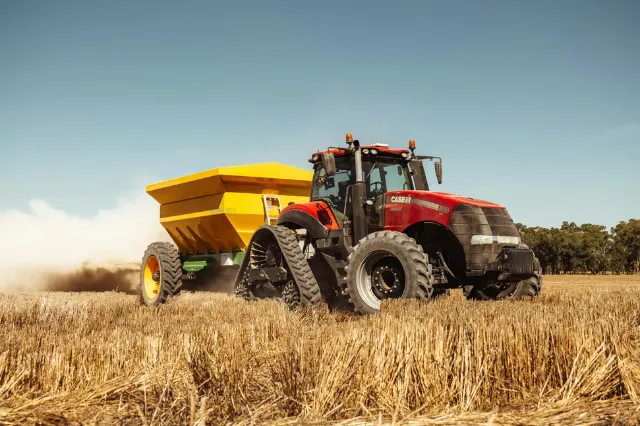
Farm machinery loans are a form of secured asset finance used to purchase agricultural equipment. The loan is generally secured against the machinery being financed.
Common assets funded under this type of finance include:
- Tractors and attachments
- Combine harvesters and headers
- Seeders, planters and spreaders
- Spray rigs
- Irrigation systems
- Dairy plant and milking equipment
- Feed mixers and grain handling systems
- Agricultural forklifts and telehandlers
In most cases, the equipment must be used primarily for business purposes. Personal use assets are usually assessed under different lending policies.
Loan terms often range from two to seven years, depending on the age and expected useful life of the asset. Some lenders set maximum age limits at the end of the term. For example, a lender may require that a tractor be no more than 15 years old at the end of the loan, although this varies by policy.
Who Typically Uses Farm Machinery Loans in Australia
These loans are used across a broad range of agricultural and rural businesses. The structure and assessment approach can vary depending on the nature of your operation, scale, and income profile.
Broadacre Cropping Operations
Grain and broadacre farmers often rely on high value machinery such as headers, seeders, boomsprays and large horsepower tractors. These assets are essential during narrow seasonal windows.
Lenders often focus their assessment on:
- Multi year income trends rather than a single bumper season
- Exposure to commodity prices
- Weather variability in your region
- Existing rural property debt
Some lenders may average the last two or three years of income to smooth volatility. If one year was materially affected by drought or flood, supporting evidence may be required to explain the variance.
Livestock and Mixed Farming Businesses
Cattle, sheep and mixed operations may finance feed mixers, livestock handling equipment, fencing machinery and transport vehicles.
In these cases, lenders typically review:
- Livestock trading income patterns
- Carrying capacity and stocking levels
- Seasonal feed costs
- Existing equipment finance commitments
Where income fluctuates with livestock prices, some lenders may apply conservative servicing assumptions.
Dairy Operations
Dairy farmers often finance milking plants, cooling systems, feed systems and tractors.
Because dairy income is usually more regular than cropping income, lenders may view cash flow as more predictable, although milk pricing and supply contracts are still relevant factors.
For dairy upgrades, lenders may also assess whether the investment improves production efficiency and long-term viability.
Agricultural Contractors
Harvesting and spraying contractors commonly finance multiple high value machines. Assessment often considers:
- Forward contracts
- Historical utilisation rates
- Client diversification
- Existing fleet age and replacement cycles
Contractors may be assessed more like service-based businesses, with attention to turnover stability and debt concentration.
Horticulture, Viticulture and Intensive Agriculture
Orchards, vineyards and intensive operations such as poultry or pig farming may finance specialised plant and automation systems. Lenders may examine:
- Long term supply agreements
- Supermarket or processor contracts
- Labour cost exposure
- Biosecurity risks
Eligibility, LVR limits and documentation requirements can vary between lenders depending on asset type, business structure and financial strength.
How Lenders Assess Farm Machinery Loan Applications
When assessing a farm machinery loan, lenders focus on several key areas. Understanding these can help you anticipate documentation requirements and potential policy considerations.
Business Financial Position
Most lenders require:
- The last two years of financial statements
- Recent tax returns
- Business Activity Statements, if required
- Current asset and liability position
Some lenders may consider one year of financials for established businesses with strong performance. Others may require a longer history.
Serviceability is generally assessed using net profit, adjusted for non-cash expenses such as depreciation. Lenders may also add back certain one-off expenses, depending on policy.
If your business operates through a company or trust, lenders will usually assess the financial strength of that entity as well as any directors or guarantors.
Income Stability and Averaging
Given the seasonal nature of farming, lenders may average income across two or more years. If one year was affected by drought or flooding, some lenders may consider excluding that year or weighting it differently, subject to evidence.
In some cases, forward contracts or commodity hedging arrangements may support income stability, although acceptance depends on lender policy.
Existing Debt Levels
Lenders review current debt commitments, including:
- Rural property loans
- Equipment finance
- Livestock finance
- Overdrafts
- Credit facilities
They assess whether total repayments remain manageable under current and stressed conditions. Some lenders apply a buffer to interest rates when testing serviceability.
Asset Type and Age
New machinery is generally easier to finance. It often comes with a warranty and has clearer valuation benchmarks.
Used machinery may still be acceptable, but lenders typically consider:
- Age of the asset
- Hours of use
- Condition
- Whether purchased from a dealer, auction or private sale
Independent valuation or inspection reports may be required for older or high-value equipment.
Loan-to-Value Ratio for Farm Equipment
The loan-to-value ratio, or LVR, refers to the percentage of the asset price being financed.
Some lenders may fund up to 100% of the purchase price plus GST for strong applicants, particularly where the business has solid financials and credit history. Others may require a deposit.
Higher LVR lending may attract additional conditions or pricing adjustments. Policy settings differ between lenders and may change over time.
Credit History and Conduct
Business and director credit reports are usually reviewed. Lenders examine repayment history, defaults, court judgments and other adverse listings.
Minor credit issues may still be considered by some lenders, depending on circumstances. More serious adverse history may limit available options.
Common Loan Structures for Farm Machinery Finance
Choosing the right structure is not just about the interest rate. It can affect tax treatment, cash flow timing and balance sheet presentation. The most common structures in Australia include the following.
Chattel Mortgage
A chattel mortgage is widely used for farm machinery loans. Under this structure:
- You own the machinery from the settlement
- The lender registers a security interest on the PPSR
- You make principal and interest repayments over the agreed term
Fixed and variable rate options are commonly available. Some lenders allow balloon payments at the end of the term, which can reduce regular repayments but increase the final obligation.
For GST-registered businesses, GST on the purchase price may be claimable upfront, subject to ATO rules. This can assist with cash flow planning.
Chattel mortgages are often preferred where the business intends to keep the machinery long-term.
Finance Lease
Under a finance lease:
- The lender owns the asset during the lease
- You pay regular rentals
- You may have an option to purchase at the end
Lease structures may suit businesses that prefer not to own the asset immediately or want structured end-of-term flexibility.
Leases may involve different residual value settings and risk assessments, depending on how the lender manages exposure to the asset.
Commercial Hire Purchase
This structure is similar to a chattel mortgage, but ownership transfers at the end of the agreement once all instalments are paid.
While less common today than chattel mortgages, some lenders still offer this structure depending on policy.
Balloon or Residual Payments
A balloon is a lump sum due at the end of the loan. For example:
- A five-year loan may include a 20% to 40% residual
- Regular repayments are reduced
- A larger amount remains at the end
This may assist with seasonal cash flow, but you need to plan for how the balloon will be managed.
At the end of the term, options may include:
- Paying out the residual
- Refinancing, subject to reassessment
- Selling or trading in the machinery
Refinancing is not automatic and depends on asset age, condition and your financial position at that time.
New Versus Used Farm Machinery Finance
The age and condition of the equipment can significantly influence lender policy and approval terms.
Financing New Machinery
New equipment is generally viewed as lower risk. Lenders often consider:
- Manufacturer warranty
- Clear purchase price and invoice
- Stronger resale value
Dealer-supplied machinery is usually straightforward to document. Some manufacturers offer branded finance programs, which may include promotional rates or deferred payments. These arrangements are still subject to lender credit assessment.
New machinery may allow longer loan terms, depending on policy.
Financing Used Machinery
Financing used farm machinery is common in agriculture. However, lenders typically assess it more carefully than new equipment. Key considerations may include:
- Age of the asset at start and end of term
- Engine hours or usage levels
- Service history
- Whether purchased privately, via auction or through a dealer
Some lenders may set a maximum age at the end of the loan. For example, they may require the machine to be no older than a specified number of years when the loan concludes.
Independent valuation reports may be required for higher-value or older assets.
Private Sales and Auction Purchases
Many lenders accept private sales and auction purchases, but additional checks may apply. These can include:
- PPSR search to confirm a clear title
- Verification of seller identity
- Inspection reports
The Personal Property Securities Register allows you to check whether a security interest is registered against the asset.
Policies vary by lender and asset type.
Interest Rates, Fees and Total Cost Considerations
When comparing farm machinery loans, it is important to look beyond the headline interest rate.
How Interest Rates Are Determined
Interest rates are usually risk-based. Factors that may influence pricing include:
- Financial strength of the business
- Loan-to-value ratio
- Asset age and type
- Loan term
- Credit history
Some lenders offer fixed rates for the full term. Others provide variable rates that may change with market conditions.
Unlike residential home loans, agricultural equipment finance rates are often tailored to the specific transaction.
Fees You May Encounter
Common fees may include:
- Application or establishment fees
- Documentation fees
- PPSR registration fees
- Broker fees, if applicable
- Early payout or termination fees
Early termination fees can be significant, particularly for fixed rate contracts.
Comparison Rates and Disclosure
Where a comparison rate is provided, it includes interest and most upfront and ongoing fees. ASIC’s MoneySmart website explains how comparison rates are calculated and what they include.
However, comparison rates are typically calculated on standardised assumptions and may not reflect every scenario.
Total Cost of Ownership
Financing cost is only part of the overall decision. You should also consider:
- Insurance premiums
- Maintenance and servicing
- Downtime risk
- Fuel efficiency
- Storage and transport costs
A lower repayment does not necessarily mean lower overall cost if maintenance or resale value is affected.
Tax and Accounting Considerations
Tax treatment can influence which finance structure is appropriate. However, individual circumstances differ, and professional advice is important.
GST Treatment
For GST-registered businesses:
- Under a chattel mortgage, GST on the full purchase price may be claimable upfront, subject to ATO rules
- Under a lease, GST is generally charged on each rental payment
The timing of GST credits can affect short-term cash flow.
Depreciation
Farm machinery is generally depreciable over its effective life.
The Australian Taxation Office publishes guidance on depreciation rates and effective life schedules. Some measures, such as instant asset write-off, or temporary full expensing have applied in recent years, though eligibility thresholds and timeframes have changed.
You should confirm current settings directly with the ATO or your accountant.
Balance Sheet Impact
Ownership structures such as chattel mortgages may result in the asset and liability appearing on your balance sheet.
Lease arrangements may have different accounting treatment under current accounting standards.
The way finance is recorded can affect gearing ratios and future borrowing capacity.
Managing Risk in Farm Machinery Finance
Farm businesses operate in a risk-exposed environment. Finance decisions should consider long-term sustainability, not just immediate need.
Weather and Production Risk
Drought, flood and extreme weather events can reduce output.
Some lenders may factor this into serviceability by averaging income or applying conservative assumptions.
Insurance may assist with asset protection, but does not necessarily cover lost income.
Commodity Price Volatility
Global commodity markets can affect grain, livestock and dairy prices.
When income is heavily linked to one commodity, lenders may assess diversification and price exposure.
Residual and Obsolescence Risk
Machinery can depreciate quickly, particularly as technology evolves. If you include a large balloon payment, you are exposed to:
- Resale value risk
- Market demand conditions at the time of sale
Aligning the loan term with the expected useful life can help manage this risk.
Debt Concentration
For businesses with multiple financed assets, lenders review total debt exposure.
Layering several equipment loans in short succession can increase repayment pressure during weaker seasons.
Planning replacement cycles can reduce strain on cash flow.
Government and Agricultural Lending Support Programs
In addition to commercial lenders, some government-backed programs exist.
The Regional Investment Corporation provides certain concessional loan programs for eligible farm businesses. Eligibility criteria are set by the government and differ from standard asset finance.
State-based assistance programs may also apply in disaster-affected areas.
These programs are separate from private lender farm machinery loans and have their own application processes.
How We Assess Farm Machinery Loan Scenarios as Brokers
When you approach a farm machinery finance broker like our team, our role is to understand your broader position before approaching lenders.
We typically review:
- Your recent financial performance
- Current debt structure
- Cash flow cycles
- Planned asset usage
- Exit strategy at the end of the term
Rather than focusing only on monthly repayment, we look at how the loan fits within your overall business plan.
We also compare lender policies. Some lenders may be more comfortable with higher LVRs. Others may have stricter age limits on used equipment. Some may allow seasonal repayment structures.
Because policies can change without notice, we confirm current criteria before submitting an application.
The Typical Farm Machinery Loan Process
While each lender has its own workflow, the general process follows a similar structure.
Initial Discussion and Information Gathering
We begin by understanding:
- Your business structure
- Recent financial performance
- Existing debt position
- Details of the machinery being purchased
At this stage, we identify potential policy issues, such as asset age limits or high LVR requirements.
Lender Comparison and Scenario Assessment
We compare lender policies across our panel. This may include reviewing:
- Maximum loan terms for the asset type
- Age restrictions
- Seasonal repayment options
- Credit appetite
Not all lenders assess agricultural income in the same way. Some may be more familiar with specific industries.
Application Submission
Once a suitable lender is identified, a formal application is submitted with supporting documents. This typically includes:
- Financial statements
- Tax returns
- Asset invoice or contract
- Identification and entity documents
Conditional Approval
The lender may issue conditional approval subject to verification of documents, valuation or additional information. Conditions might include:
- Updated BAS
- Asset inspection report
- Evidence of insurance
Settlement and PPSR Registration
On settlement:
- Loan documents are executed
- Funds are released to the seller
- The lender registers their interest on the PPSR
From this point, regular repayments commence according to the agreed schedule.
Timeframes vary depending on lender workload, documentation quality and asset type.
Planning Your Next Step With Farm Machinery Finance
Upgrading or replacing farm equipment is a significant decision, and understanding how lenders currently assess farm machinery loans can help you move forward with clarity.
If you would like to explore what options may be available for your business, our team at Unconditional Finance can help you compare lender policies and explain the typical requirements before you commit to a purchase.
Disclaimer: All lending criteria, rates, fees and product features are determined by individual lenders and may change without notice. Approval is subject to lender assessment of your financial circumstances, credit history and the specific asset being financed. This information is general in nature and does not constitute credit advice.
Frequently Asked Questions (FAQs)
Some lenders may provide conditional approval based on your financial position before a specific asset is selected. Final approval usually requires a tax invoice or purchase contract with full equipment details. Policies vary between lenders.
Depending on the lender, related costs such as delivery, installation, or essential attachments may be included if they form part of the asset purchase. These costs generally need to be clearly itemised on the supplier invoice.
Farm machinery loans are typically secured only against the equipment being financed. However, some lenders may request additional security or director guarantees depending on the borrower’s financial position and risk profile.
Start-up or newly established farming businesses may still be considered, although lenders usually require stronger supporting evidence, such as relevant industry experience, projected income, or additional security. Approval depends on individual lender policy and risk assessment.
Some lenders may offer seasonal or structured repayments that align with harvesting or livestock income cycles. Availability depends on the lender’s policy and the overall strength of the application.
If income reduces due to seasonal or market conditions, it is important to contact the lender early. Some lenders may consider hardship arrangements depending on the circumstances, but approval is not automatic and is assessed case by case.
Yes, many lenders may consider machinery used for both on-farm and contracting purposes, provided income is clearly documented. They may assess the total business income and risk exposure before approving the loan.